Some links in this guide are affiliate links, if you buy through them we may earn a small commission at no extra cost to you. Here’s our disclosure.
Quick Answer
Animal mandala coloring pages are printable line-art designs that place an animal, like an owl or butterfly, at the center of a symmetrical mandala, with feathers and fur radiating into balanced rings. They combine the calming, meditative repetition of a mandala with a recognizable subject, and work for kids, teens, and adults.
You sit down to color, hoping for twenty quiet minutes to yourself, and reach for the same geometric mandala you have printed a dozen times. It is pretty, but it has started to feel like homework. Or maybe you are trying to coax a restless kid away from a screen, and a plain circle of triangles just does not hold their attention past the first wedge. Coloring is supposed to be the easy part of your day, the part that untangles your head instead of adding to your to-do list. Yet so many free pages are either too plain to stay interesting or so densely abstract that they feel more stressful than soothing. What is missing is a subject you actually want to spend time with, something that rewards the slow detail work with a picture you are genuinely proud to hang on the fridge. That gap is exactly what animal designs are built to fill.
What are animal mandala coloring pages?
Animal mandala coloring pages are printable line-art designs that arrange an animal (an owl, a fox, an elephant, a butterfly) inside the symmetrical, repeating pattern of a traditional mandala. Instead of a plain geometric circle, the animal's face or body becomes the center, and feathers, fur, petals, and geometric shapes radiate outward in balanced rings. This pairing gives you the meditative repetition of a classic mandala with a recognizable subject to anchor it, so the finished page reads as a piece of art rather than an abstract pattern. Most designs use bold, closed outlines that are easy to color inside, with a deliberate mix of large open areas and fine, detailed sections. That range lets you set your own pace: block in the big shapes quickly when you want a fast win, then slow down for the intricate borders when you want to disappear into the detail. Printed on standard letter paper, the same sheet works for kids, teens, and adults, which is a big part of why these pages have become a household staple. You get structure and freedom on a single page.
Why are animal mandala coloring pages so calming?
The calming effect comes from the way a mandala's symmetry gives your brain a gentle, predictable structure to follow. When a design repeats in balanced rings around a center, your attention settles into the rhythm of filling one section, then its mirror, then the next, and that steady loop is what quiets a busy mind. Art therapists have long linked this kind of focused, repetitive coloring to lower anxiety, because it occupies your attention just enough to interrupt racing thoughts without demanding hard decisions or a "right" answer. Adding an animal at the center deepens the effect. You get an emotional anchor, a creature you find soothing or joyful, layered on top of the meditative pattern, so the page feels personal instead of clinical. The result is a low-stakes activity with a clear finish line, which is exactly what a frazzled afternoon needs. There is no score to chase and no wrong way to do it. You simply choose a color, fill a section, breathe, and watch the picture come together one careful ring at a time. Twenty minutes later the page is fuller and, more often than not, so are you.
Which animals make the best coloring mandalas?
The animals that work best are ones with strong, symmetrical features and natural texture, because those details map beautifully onto a mandala's radiating rings. Owls top the list: their round faces and layered feathers practically beg to be framed in concentric circles, which is why the owl design is the free printable at the heart of this guide. That said, plenty of creatures translate wonderfully into mandala form, and the right pick depends mostly on who is holding the crayons. Here is a quick guide to the most popular options and who tends to love each one:
| Animal | Why it works as a mandala | Best for |
|---|---|---|
| Owl | Round face and layered feathers fan into neat rings | Beginners and adults |
| Butterfly | Built-in symmetry, wide wings hold bold pattern | Kids and beginners |
| Elephant | Strong outline, big ears give large color areas | All ages |
| Fox | Pointed features and fur lines add fine detail | Teens and adults |
| Lion | Mane radiates outward like a natural sunburst | Confident colorers |
| Turtle | Shell segments form a ready-made mandala grid | Younger kids |
Start with whichever creature you feel drawn to. The simple pull toward a favorite animal is half of what makes the page relaxing to finish, because you are already invested in how it turns out before you lay down the first color.
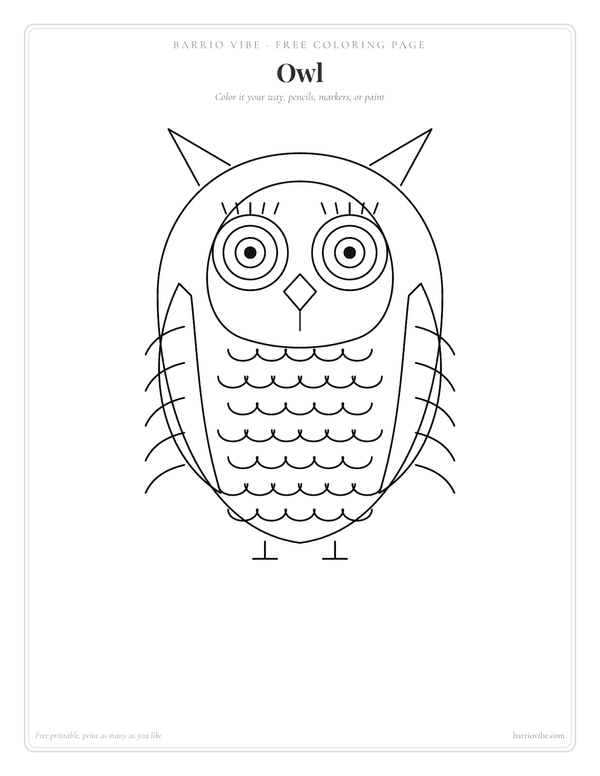
Owl
A zentangle-style owl coloring page with feather rows, patterned wings, and big eyes, a detailed animal page to color.
Are animal mandala coloring pages for kids or adults?
Both, and that flexibility is one of their biggest strengths. The same subject scales across ages simply by adjusting the density of the pattern, so one theme can serve a whole family. For young children, look for animal mandalas with large, simple shapes and thick outlines. Fewer sections to fill means less frustration and a quicker sense of accomplishment, which keeps small hands coming back. Teens and adults tend to gravitate toward the intricate versions, where fine linework and dozens of tiny compartments turn a single page into an hour of absorbing, screen-free detail work. Because the animal stays recognizable at every level of complexity, everyone can color the same theme together while each person works at their own comfortable skill level. If you are building a collection for mixed ages, pair a few detailed sheets for the grown-ups with our simpler free animal coloring pages for the little ones, and the whole table stays happy at once. It is a genuinely rare activity that spans generations without anyone feeling talked down to or left behind, and it costs nothing but paper and a little quiet time.
What supplies do you need to color animal mandalas?
Very little, which is a big part of the appeal. A printer, standard paper, and any coloring tool you already own are enough to start today. That said, the fine detail in these designs really shines with the right supplies, so it is worth a small upgrade if you color often. Colored pencils give you the most control for shading small feather or scale sections and blending gentle gradients, while fine-tip markers or gel pens make the intricate borders pop with saturated, even color. A set of quality gel pens, the kind that come in metallic and glitter finishes, adds a lovely dimension to an animal's eyes or wingtips that ordinary crayons cannot match, and they glide through tight spaces without tearing the paper. If you plan to color regularly, printing on slightly heavier cardstock (60-70 lb) keeps markers from bleeding through to the next sheet. One more small trick: keep your tools in a little caddy near your favorite chair so the whole setup takes ten seconds to begin. The less friction between you and the page, the more often you will actually sit down and let yourself relax, which is the entire point.
How do you color an animal mandala for the best results?
Work from the center outward and from light colors to dark, the same way the design itself radiates. Starting at the animal's face anchors your color scheme early, and then you can echo those same tones through the surrounding rings for a cohesive, intentional look. Choose a palette of three to five colors before you begin, because repeating a limited set of shades across the mirrored sections is exactly what gives mandalas their signature harmony; a scattered rainbow tends to look busy instead of balanced. For the meditative benefit, resist the urge to rush. Let each ring be its own small task and take a slow breath between them, treating the page as a break rather than a project to finish. If you make a stray mark, leave it, because a single imperfection disappears completely once the whole pattern fills in. When you are ready for more variety, our mandala coloring pages for adults offer dozens of intricate patterns to keep the calm going long after the animals are done. Print a fresh sheet whenever you need a reset, and let the coloring quietly do the rest.
Owl
A zentangle-style owl coloring page with feather rows, patterned wings, and big eyes, a detailed animal page to color.
Frequently Asked Questions
What are animal mandala coloring pages?
They are printable line-art pages that place an animal, such as an owl or butterfly, at the center of a symmetrical mandala. The animal's features radiate outward in balanced rings, blending a recognizable subject with the meditative, repeating pattern of a classic mandala.
Are animal mandala coloring pages good for stress relief?
Yes. The symmetry gives your brain a predictable rhythm to follow, and art therapists link this focused, repetitive coloring to lower anxiety. The animal at the center adds an emotional anchor, making the page feel calming and personal rather than abstract and clinical.
Are these coloring pages for kids or adults?
Both. The same theme scales by pattern density: young kids do best with large, simple shapes and thick outlines, while teens and adults enjoy intricate versions with fine detail. Families can color the same animal together, each at their own skill level.
What supplies work best for coloring mandalas?
Colored pencils give the most control for shading small sections and blending gradients, while fine-tip markers or gel pens make intricate borders pop. Printing on heavier cardstock (60-70 lb) keeps markers from bleeding through, though any tool you own works fine to start.
How do you color an animal mandala for the best results?
Work from the center outward and from light colors to dark, starting at the animal's face to anchor your scheme. Pick a palette of three to five colors and repeat them across mirrored sections. That limited, echoed palette is what gives mandalas their signature harmony.