Some links in this guide are affiliate links, if you buy through them we may earn a small commission at no extra cost to you. Here’s our disclosure.
Quick Answer
The best preschool crafts for kids are open-ended, low-prep projects using materials you already own, paper-plate animals, torn-paper collages, handprint art, and pasta necklaces. Focus on process over product, stock one supply bin, and plan a week at a time so craft time stays easy instead of stressful.
You saved the craft on Pinterest weeks ago, the one with the perfect paper-plate sun and the caption that promised "20-minute rainy-day magic." Then the actual afternoon arrives. You spend fifteen minutes hunting for the googly eyes, another ten cutting shapes while your three-year-old melts down at the table, and the whole thing is over in four messy minutes that end in glue on the dog. By the time you've wiped down the table, it feels less like a sweet memory and more like a chore you invented for yourself. The problem is rarely your kid, and it is never a lack of good ideas, the internet has infinite ideas. The problem is that craft time has no system: no ready supply stash, no simple plan, and no way to match the project to the ten minutes and the mood you actually have. So every craft starts from zero, and the setup costs more than the payoff. That is what quietly makes something meant to be joyful feel like more work than it's worth, and why the pin stays saved instead of made.
What are the best easy preschool crafts for kids?
The best preschool crafts for kids are open-ended, low-prep projects that use materials you already own and let a child lead the doing. Think process over product: paper-plate animals, torn-paper collages, cotton-ball clouds, pasta necklaces, handprint art, egg-carton caterpillars, and coffee-filter flowers dipped in watercolor. These work because there is no "right" result to get wrong, a three-year-old can succeed at gluing scraps onto paper, which builds confidence and buys you fifteen calm minutes. Skip anything that needs precise cutting, tiny fiddly pieces, or a finished look only an adult can achieve; those frustrate small hands and quietly turn into you doing the craft while your child drifts off to something else. A good rule: if you'd have to redo it to make it "look right," it's too advanced for this age. Rotate five or six reliable favorites rather than chasing a brand-new project every single day, and craft time gets calmer and easier for everyone at the table.
What craft supplies should you keep stocked at home?
Keep a small, fixed set of basics on hand and you'll never scramble mid-project again. Roughly 90% of easy preschool crafts pull from the same short list, so stock it once and restock as it runs low. Here is the core stash worth keeping in one spot:
- Paper goods: construction paper, paper plates, cardstock, paper bags, and cardboard tubes (save your paper-towel rolls)
- Sticky things: washable glue sticks, a bottle of white glue, and kid-safe tape
- Color: washable markers, crayons, and washable paint with a couple of chunky brushes
- Add-ons: pom-poms, googly eyes, pipe cleaners, cotton balls, and stickers
- Tools: safety scissors and a plastic tray or placemat to contain the mess
Store it all in one clear, stackable bin so a craft is a grab-and-go, not a scavenger hunt across three drawers and a closet shelf. When the whole kit lives in a single labeled container, "let's make something" turns into two minutes of setup instead of twenty, and that speed is often the difference between actually crafting and quietly giving up. You don't need the fancy stuff, either; a preschooler will happily turn a cereal box and a handful of pom-poms into a masterpiece, so resist the urge to buy a giant craft haul you'll never finish.
How do you plan preschool crafts without spending hours prepping?
Plan a whole week of crafts in one short sitting instead of deciding fresh each afternoon. The prep that eats your time isn't the crafting, it's the daily hunt for an idea and the last-minute supply gathering. Batch it: once a week, pick four or five projects, check that you have the materials, and set out anything you'll need. Writing the plan down is what makes it stick, because a plan on the fridge decides for you when your brain is fried at 3 p.m. That's exactly what our free preschool crafts planner is built for, a seasonal idea list, a supplies checklist so nothing's missing mid-craft, and a simple weekly grid to slot a project into each day. Fill it in Sunday, and the week runs itself. You'll spend a few quiet minutes planning once instead of improvising under pressure five separate times. It also doubles as a keepsake: jot which crafts landed and which flopped, and next month's plan gets even faster. Stick the planned page on the fridge next to the supply bin, and craft time becomes a decision you already made rather than one more thing to figure out.
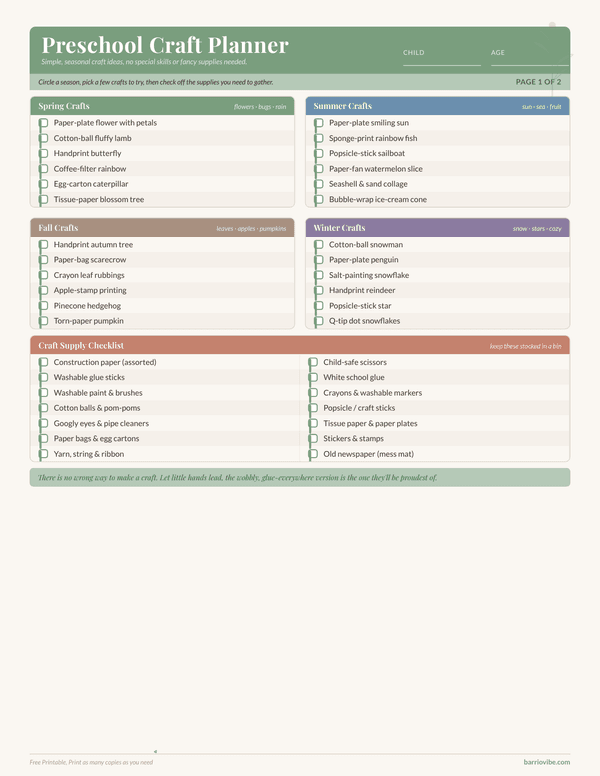
Preschool Crafts Idea Planner, Free Printable
A free printable preschool crafts planner with seasonal craft ideas, a craft supply checklist, and a weekly craft planner to organize easy at-home crafts for kids.
What are good preschool crafts by season?
Match crafts to the season and you get built-in variety plus a natural reason to make something, no theme-hunting required. Seasonal projects also connect to what your child sees outside, which makes them stick. Here's a simple rotation to pull from all year:
| Season | Easy craft ideas |
|---|---|
| Spring | Coffee-filter flowers, paper-plate rainbows, tissue-paper butterflies, seed cups |
| Summer | Handprint suns, paper-plate fish, salt-and-watercolor beach scenes, ice painting |
| Fall | Leaf-rubbing art, paper-bag scarecrows, apple stamping, egg-carton pumpkins |
| Winter | Cotton-ball snowmen, paper snowflakes, handprint reindeer, torn-paper mittens |
Keep a couple of "anytime" favorites in the mix too, collage, playdough sculptures, and pasta jewelry never go out of season and rescue a rainy afternoon fast. Seasonal crafts also open the door to a quick nature walk beforehand: gather leaves, acorns, or a few flowers, then bring them to the table as free craft supplies. If you want a broader mix of non-craft options for the days a child isn't in the mood to glue, our roundup of preschool activities to do at home pairs perfectly with this list. Rotating by season means you're never staring at a blank table wondering what on earth to make.
How do you make craft time less messy and independent?
Set up the space so your preschooler can craft mostly on their own and cleanup takes two minutes. Start by containing the mess before it starts: work on a wipeable tray or a plastic tablecloth, roll up sleeves, and keep a damp cloth within reach. Pre-portion the supplies, a few squirts of glue in a lid, paper already torn into a pile, so your child isn't waiting on you and you're not refereeing the glue bottle. Storing everything in clear labeled bins or a lidded craft caddy pays off here: your child can see what's available, help set up, and put it all back, which builds the independence that gives you actual hands-free minutes. Choose washable everything so spills are a non-event rather than a stain you'll scrub at later. Give your child one clear job to own, passing out the paper, or squeezing the glue, so they feel in charge instead of managed. And lower your standards on purpose: a little mess is the sign of a kid who's genuinely absorbed, which is the whole point. The goal isn't a spotless table or a frame-worthy result; it's a child who's busy, proud, and learning while you get a few minutes to breathe.
Why are crafts so good for preschoolers' development?
Crafting builds the exact skills preschoolers need for kindergarten, disguised as play. Cutting, gluing, pinching pom-poms, and threading beads all strengthen the small hand muscles and grip that a child will later use to hold a pencil and write. Choosing colors and arranging pieces develops planning, decision-making, and early creativity, while following a few simple steps builds focus and the ability to see a task through. Open-ended, process-focused crafts also grow confidence, because there's no wrong way to do them, a child learns their ideas are worth making. To lean into the hand-strength benefits specifically, layer in a few targeted fine motor activities for little hands alongside your weekly crafts. So the next time craft time looks like chaos, remember: those glue-covered fingers are doing real developmental work. Keep it light, keep it frequent, and let the planner take the pressure off.
Preschool Crafts Idea Planner, Free Printable
A free printable preschool crafts planner with seasonal craft ideas, a craft supply checklist, and a weekly craft planner to organize easy at-home crafts for kids.
Pick five favorites, stock one bin, and fill in the planner on Sunday, that's the entire system. Craft time stops being a project you dread and becomes fifteen easy minutes you both look forward to.
Frequently Asked Questions
What are the easiest crafts for 3-year-olds?
The easiest crafts for 3-year-olds are process-based projects with big pieces and no precise cutting: torn-paper collages, handprint painting, gluing pom-poms onto paper, cotton-ball snowmen, and pasta necklaces. There's no wrong result, so your child can succeed independently and stay engaged for ten to fifteen minutes.
How do I set up preschool crafts without a big mess?
Work on a wipeable tray or plastic tablecloth, roll up sleeves, and keep a damp cloth nearby. Pre-portion glue into a lid and tear paper in advance so your child isn't waiting on you. Use washable everything, and store supplies in clear bins so setup and cleanup each take two minutes.
What craft supplies do I need for preschoolers?
Stock a simple core kit: construction paper, paper plates, cardboard tubes, washable glue sticks, kid-safe tape, washable markers, crayons, washable paint, pom-poms, googly eyes, pipe cleaners, cotton balls, stickers, and safety scissors. About 90% of easy preschool crafts pull from this list, so stock it once and restock as items run low.
How often should preschoolers do crafts?
A few times a week is plenty, short, frequent craft sessions beat long occasional ones. Fifteen minutes several days a week builds fine-motor skills, focus, and creativity without burning out you or your child. Planning a week at a time with a printable planner makes that consistency easy to keep up.
Are process crafts better than following a template?
For preschoolers, yes. Process-focused crafts, where the doing matters more than the finished look, build confidence because there's no wrong way to do them. Template crafts often need adult precision, so you end up doing the work while your child watches. Save structured projects for older kids.