Some links in this guide are affiliate links, if you buy through them we may earn a small commission at no extra cost to you. Here’s our disclosure.
Quick Answer
A grocery list for two should use split-friendly quantities and a few flexible base ingredients instead of shrunk-down family portions. Buy proteins you can freeze, three or four versatile vegetables, and shelf-stable backups, keeping perishables to what two people finish in a week. Group it by aisle and shop from a short meal plan.
Cooking for two has a math problem nobody warns you about. Recipes serve four to six. The bagged salad wilts before you finish it. The "family pack" of chicken is the only size on the shelf, and half a loaf of bread goes hard on the counter before you get to it. So you either eat the same dish five nights running or you toss a genuinely shocking amount of food you actually paid for. If you shop for two people the way grocery stores are built, for a household of four, waste is baked in from the very first aisle. And the guilt piles up right alongside the compost: money in the trash every single week, plus the low hum of a fridge full of good intentions gone soft. The problem is not that you overbuy on purpose. It is that almost nothing about a supermarket is designed for a household of two.
What should a grocery list for two actually include?
A grocery list for two should be built around split-friendly quantities and a few flexible base ingredients, not shrunk-down family portions. Start with proteins you can divide and freeze, chicken thighs, ground turkey, eggs, buying the larger pack only when you will portion it the same day. Add three or four vegetables that work across several meals, so nothing is bought for a single recipe. Include one or two starches that keep, plus shelf-stable backups for nights you skip the store. Keep perishables short: only what two people will realistically finish in five to seven days.
Here is a simple two-person framework to build from:
| Category | Buy this way | Two-person examples |
|---|---|---|
| Proteins | Portion and freeze same day | Chicken thighs, eggs, ground turkey |
| Fresh produce | Loose, 3-4 versatile picks | Onions, carrots, spinach, peppers |
| Starches | Shelf-stable, keeps for weeks | Rice, pasta, potatoes |
| Pantry backups | Emergency-meal insurance | Canned beans, tomatoes, broth |
The goal is a list where nearly every item appears in more than one meal.
How do you shop for two without wasting half of it?
The most effective move is to buy loose or by-the-item wherever possible, so the quantity matches your household instead of a family of four. Grab three apples instead of a five-pound bag, ask the deli or butcher counter for exactly two portions, and use the bulk bins for grains and nuts so you scoop only what you need. When the big pack is genuinely cheaper per unit, split it the day you get home, repackage half the meat into the freezer and freeze bread by the slice.
Then build in some planned overlap. Roast one tray of vegetables to use across two different dinners, or cook a single pot of grains and repurpose it midweek. Treat the crisper drawer like a countdown clock, eating the fastest-spoiling items first and saving the hardy stuff for later in the week. A few reliable swaps make the difference at the shelf:
- Family pack of chicken → ask the counter for two portions, or split and freeze the rest the day you buy it.
- Five-pound bag of apples → three or four loose apples that you will actually eat.
- Pre-bagged salad → a head of romaine or a handful from the bulk greens that keeps longer.
- Full loaf of bread → freeze half by the slice and pull out what you need.
These small habits turn "buy less" from a vague resolution into specific choices you make right there in the aisle, which is exactly where the waste starts.
How much should two people spend on groceries a week?
A realistic weekly grocery budget for two adults usually lands somewhere between about $85 and $150, depending on your region, how much meat you buy, and how often you cook versus eat out. The surest way to stay near the lower end is to shop from a plan instead of wandering the store: decide your meals first, list only what those meals need, and check what you already own before you leave the house.
Build the list around a few inexpensive, filling staples, beans, eggs, rice, seasonal produce, and let pricier proteins be the accent rather than the base of every dinner. Watch unit prices instead of package prices, because a "bulk deal" only saves money if you actually finish it. If you want a step-by-step system for trimming the total, our guide to making a grocery list on a budget breaks it down further. Waste is the hidden line item, and cutting it is the fastest raise a two-person kitchen can give itself.
How do you organize a grocery list for two so you shop faster?
Group your list by store section, produce, meat and deli, dairy, pantry, frozen, so you shop each area once and never double back. A by-aisle layout does more than save steps; it also quiets the impulse detours that quietly inflate a two-person cart, because you are moving with purpose instead of browsing. Keep a running list on the fridge all week and add items the moment you run low, so nothing gets bought twice or forgotten entirely.
Note quantities right on the list, "chicken thighs, 2 portions," "spinach, 1 small bag", to lock in the smaller amounts before the store tempts you bigger. The free grocery list template below is already divided into sections with room for quantities and a small meal-plan column, so your list arrives at the store pre-sorted and ready to work. For a deeper walk-through of the by-aisle method and why it saves both time and money, see our by-aisle grocery list organizer.
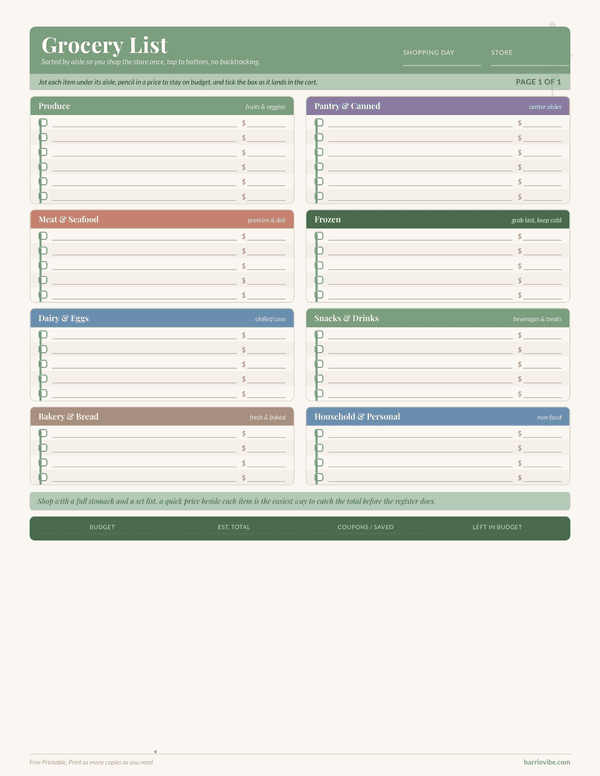
Grocery List Template (By Aisle), Free Printable
A free printable grocery list template organized by store aisle, produce, meat, dairy, pantry, frozen, and more, with a price column and budget tracker so you shop faster and spend less.
What are the best foods to buy for two people?
The best foods for a two-person kitchen are versatile, forgiving ingredients that stretch across several meals and store well. Think eggs, thigh or rotisserie chicken, hardy greens, root vegetables, and pantry anchors like rice, pasta, canned beans, and tomatoes, items that recombine into dozens of dinners instead of locking you into one recipe. Favor produce with a longer shelf life, like cabbage, carrots, citrus, and squash, over delicate things you probably will not finish in time.
Good storage is what makes all of this actually work. A set of clear airtight containers lets you portion bulk buys, see what is left before it hides in the back of the fridge, and keep opened bags fresh far longer than their original packaging. When you can see your food, you eat it, and a two-person household lives or dies on not forgetting the half-used half of everything. Label each container with the date you opened it so the oldest items get used first, and give a single fridge shelf to "eat me soon" leftovers so nothing quietly expires out of sight. Keep a couple of shelf-stable emergency meals on hand, too, for the nights cooking falls apart, a can of beans, a box of pasta, and a jar of sauce will always beat a delivery order you did not really want.
How do you turn a grocery list for two into fewer leftovers and lower bills?
Pair your list with a short meal plan so every item already has a job before it reaches the cart. Sketch four or five dinners for the week, not seven, leaving room for leftovers and one takeout night, then write your grocery list straight from those meals. Deliberately overlap ingredients: if Monday uses half a bunch of cilantro, give Wednesday a reason to finish the rest.
Cook once and eat twice wherever you can, portioning the second serving into tomorrow's lunch the moment dinner is done, so it feels like a gift instead of a chore. Keep one loose "use-it-up" night each week to clear the fridge before the next shop, which quietly erases most of your waste. A grocery list for two works best not as a shopping tool on its own but as the last step of a small plan: the plan decides, the list remembers, and your bill and your trash both shrink.
Grocery List Template (By Aisle), Free Printable
A free printable grocery list template organized by store aisle, produce, meat, dairy, pantry, frozen, and more, with a price column and budget tracker so you shop faster and spend less.
Print it, keep it on the fridge, and let a five-minute plan do the deciding. Shopping for two gets easier the moment the list, not the store, is the thing that sets the size.
Frequently Asked Questions
How much should two people spend on groceries a week?
A realistic weekly grocery budget for two adults usually falls between about $85 and $150, depending on region, how much meat you buy, and how often you eat out. Shopping from a meal plan and building around cheap staples keeps you near the lower end.
How do I stop wasting food when cooking for two?
Buy loose or by-the-item so quantities match your household, split large packs into the freezer the day you shop, and plan deliberate ingredient overlap across meals. Eat the fastest-spoiling produce first and keep one use-it-up night each week to clear the fridge.
What groceries should two people buy for the week?
Focus on versatile, storable basics: eggs, thigh or rotisserie chicken, hardy greens, root vegetables, and pantry anchors like rice, pasta, canned beans, and tomatoes. These recombine into many meals instead of locking you into one recipe, so little goes to waste.
How do I organize a grocery list for two?
Group the list by store section, produce, meat, dairy, pantry, frozen, so you shop each area once without backtracking. Note quantities beside each item, keep a running list on the fridge, and add things the moment you run low so nothing is bought twice.
Is it cheaper to meal plan for two?
Yes. Planning four or five dinners and writing your list from those meals means you buy only what has a purpose, overlap ingredients, and skip impulse items. Cutting waste is the biggest saving, since food you throw away is money spent for nothing.