Some links in this guide are affiliate links, if you buy through them we may earn a small commission at no extra cost to you. Here’s our disclosure.
Quick Answer
Meal planning lunch works best when you pick a small rotation of 3 to 5 lunches you like, batch-prep the components on one quiet day, and assign each weekday a lunch on a printable grid. Deciding once beats deciding daily, it saves money, cuts waste, and ends the midday scramble.
Somewhere around 11:30 every day, the same small panic sets in: lunch. You skipped breakfast, the fridge is a jumble of half-used containers, and the easiest option is whatever can be eaten standing over the sink, or a drive-through you didn't budget for. If you pack lunches for kids or a partner too, the morning scramble multiplies, and you end up throwing together the same sad sandwich you swore you were done with. Dinner usually gets a plan. Lunch almost never does, which is exactly why it feels chaotic and expensive and vaguely disappointing five days a week. It's also the meal we're most likely to hand over to convenience, the app, the vending machine, the sad desk salad bought in a hurry, precisely because no one decided in advance what it should be. The truth is that lunch is the meal most improved by a little forethought and least helped by willpower. It doesn't take more cooking or more discipline. It takes a repeatable plan you make once, so that at 11:30 the decision is already made and all you have to do is grab it.
How do you start meal planning lunch for the week?
Start meal planning lunch by choosing a small rotation of three to five lunches you actually like and building the whole week from those, instead of inventing something new each day. Decision fatigue, not lack of options, is what wrecks lunch, so you want fewer choices, not more. Pick one day to plan (Sunday works well), then map each weekday to a lunch: two make-ahead meals, two "assemble in five minutes" combos, and one leftover-from-dinner day. That mix keeps the plan realistic, you're never depending on cooking five separate lunches, just prepping a little and assembling the rest. Write it where you'll see it, check what you already have, and add only the missing ingredients to your grocery list. This is the same logic behind any good weekly meal planning routine, decide once, shop once, and let the plan carry the week. Batching those decisions on a single quiet day is what keeps the other six calm, because the hard part is already done before Monday.
What are the easiest lunches to prep ahead for the week?
The easiest lunches to prep ahead are ones that hold up for three to four days in the fridge and don't go soggy: grain bowls, mason-jar salads, wraps kept separate from their fillings, and soups or chili portioned into single servings. Batch a base on your prep day, a pot of rice or quinoa, a sheet pan of roasted vegetables, a protein like shredded chicken or baked tofu, then mix and match across the week so nothing feels repetitive. Here's a simple five-day rotation you can build from one prep session:
| Day | Lunch | Prep style |
|---|---|---|
| Monday | Grain bowl (quinoa, roasted veg, chicken) | Batch-cooked Sunday |
| Tuesday | Mason-jar salad (dressing on the bottom) | Assembled ahead |
| Wednesday | Leftovers from Tuesday's dinner | Cook once, eat twice |
| Thursday | Hummus-and-veg wrap | 5-minute assembly |
| Friday | Soup or chili (frozen in portions) | Batch-frozen earlier |
Keep components separate and combine the morning-of, and a week of lunches comes together in about an hour of Sunday prep.
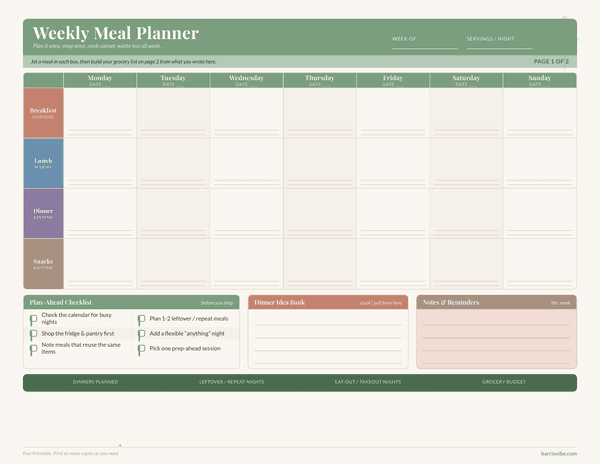
Weekly Meal Planner, Free Printable
A free printable weekly meal planner with a Monday, Sunday grid for breakfast, lunch, dinner, and snacks, plus a by-aisle grocery list and prep plan so you can plan your meals for the week and shop just once.
How do you keep packed lunches from getting boring?
Keep lunches interesting by rotating a few flavor profiles rather than repeating the exact same meal, because monotony, not effort, is what sends people back to takeout by Wednesday. Build lunches from a simple formula: a base (grain, greens, or bread), a protein, two vegetables, and something with punch, a sauce, dressing, pickle, or handful of nuts. When you swap just the punch element, the same base feels new: pesto on Monday, a lemon-tahini drizzle Tuesday, salsa Thursday. Theme your days if it helps, bowl day, wrap day, soup day, so variety is built into the structure instead of decided each morning. Texture matters as much as flavor, so pack something crunchy alongside something soft. Keep a small stash of flavor-changers on hand, pickled onions, a good hot sauce, toasted seeds, a wedge of citrus, so a five-minute swap rescues a lunch you're bored of. And plan one lunch a week you genuinely look forward to; a meal you enjoy is one you'll actually eat instead of abandoning for the vending machine. Small contrasts keep a simple rotation from ever feeling like a rut.
How much time and money does lunch meal planning actually save?
Lunch meal planning typically saves the most money of any meal you plan, because lunch is the one people most often buy out. Swapping a $12 daily takeout lunch for prepped meals at roughly $3 a serving saves close to $45 a week per person, well over $2,000 a year for one adult, and far more for a family. The time savings are just as real: one focused hour of batch prep on the weekend replaces five rushed, decision-heavy mornings, and it cuts the midday "what do I eat" stall that quietly eats your workday. There's a hidden health dividend too, a lunch you planned is almost always more balanced than one you grabbed in a hurry, so you eat better without thinking about it. Planning also slashes food waste, since you buy only what the week's lunches call for instead of letting produce wilt unused, and leftovers get a scheduled home instead of dying in the back of the fridge. If stretching the grocery budget is the goal, pairing your lunch plan with a budget-minded meal planning system compounds the savings. The upfront hour is the whole cost; everything after that is time and money returned.
How do you meal plan lunches for the whole family?
Plan family lunches by building around a shared base and letting each person customize the toppings, so you cook once but still please picky eaters. If you're roasting vegetables and cooking a grain for adult bowls, the kids can have the same protein and grain deconstructed, plain, unmixed, and familiar, with fruit and a favorite snack alongside. Kids often reject mixed food, not the ingredients themselves, so keeping components separate is what turns one meal into two happy plates. Involve kids in choosing from two or three approved options; a lunch they picked is a lunch that comes home eaten instead of traded away. Prep components in bulk and store them in clear stackable containers or a set of bento-style lunch boxes so both you and the kids can grab-and-build in the morning without a production. Keep a short list of no-cook backups, cheese, crackers, fruit, nut butter, for the mornings that get away from you. One base, a few variations, and everything visible: that's how one plan feeds different appetites without becoming several separate jobs.
What should be on your lunch meal planning printable?
A good lunch meal planning printable has three things: a five-day grid to assign each day's lunch, a prep-ahead checklist for what to batch on your planning day, and a running grocery list for the missing ingredients. The grid removes the daily decision; the prep list turns your plan into a single hour of action; the grocery column makes sure you actually buy what the week needs. Add a small "backups" box for no-cook emergency lunches, and a spot to note leftovers you can repurpose so nothing gets wasted. That structure is the whole point of meal planning lunch on paper instead of in your head: your future self never has to reconstruct the plan. Fill it out on your planning day, stick it on the fridge next to your dinner plan, and the whole week's midday meals are decided before Monday arrives. Print a fresh copy each week, or slip one into a sheet protector and reuse it with a dry-erase marker, either way, the plan does the deciding so your 11:30 self doesn't have to.
Weekly Meal Planner, Free Printable
A free printable weekly meal planner with a Monday, Sunday grid for breakfast, lunch, dinner, and snacks, plus a by-aisle grocery list and prep plan so you can plan your meals for the week and shop just once.
Keep the printable somewhere you'll see it, plan once on your quiet day, and let the rotation carry you through the rest of the week. Lunch stops being a daily scramble the moment it becomes a single decision you only have to make once.
Frequently Asked Questions
How do I meal plan lunch for a week?
Choose one planning day, pick 3 to 5 lunches you actually like, and assign each weekday one: two make-ahead meals, two five-minute assemblies, and one leftover day. Batch the shared components in about an hour, then add only the missing ingredients to your grocery list.
What are the best make-ahead lunches for work?
Grain bowls, mason-jar salads with dressing on the bottom, wraps stored with fillings separate, and portioned soups or chili hold up best for three to four days. Keep wet and dry components apart and combine the morning-of so nothing turns soggy before you eat it.
How much money can meal planning lunch save?
Swapping a roughly $12 daily takeout lunch for prepped meals at about $3 a serving saves close to $45 a week per person, over $2,000 a year for one adult. Lunch is the meal most often bought out, so planning it returns the biggest savings of any meal.
How do I keep packed lunches from getting boring?
Build every lunch from a base, a protein, two vegetables, and one punchy element, a sauce, pickle, or nuts. Swap just the punch (pesto, tahini, salsa) and the same base feels new. Theme your days and pack a crunchy item with a soft one to keep texture interesting.
Can I reuse a printable lunch planner each week?
Yes. Print a fresh copy weekly if you like the clean-slate feeling, or slip one sheet into a plastic sheet protector and fill it in with a dry-erase marker to reuse indefinitely. Either way, keep it on the fridge beside your dinner plan so the whole day is visible.