Some links in this guide are affiliate links, if you buy through them we may earn a small commission at no extra cost to you. Here’s our disclosure.
Quick Answer
The healthiest way to meal plan is to build around balanced plates instead of strict recipes: pencil a protein, a vegetable or two, and a smart carb into each dinner. Plan just five dinners, lean on repeat breakfasts and lunches, then shop straight from the plan.
Somewhere around Wednesday, the good intentions wear off. You started the week planning to cook real dinners, but the fridge is a jumble of half-used vegetables, you cannot remember what you meant to make with that chicken, and the takeout menu is suddenly very persuasive. It is not that you do not know what healthy eating looks like, it is that deciding, shopping, and cooking all in the same tired moment is too much. So the salad greens wilt, the produce you felt so virtuous about buying turns to compost, and dinner becomes whatever is fastest. If eating well keeps collapsing by midweek no matter how motivated you start, the missing piece usually is not willpower or recipes. It is a plan you made once, calmly, before you were hungry and out of time, one that decides the hard parts in advance so the rest of the week can run on autopilot.
What is the healthiest way to meal plan for the week?
The healthiest approach to meal planning healthy food starts with a simple structure rather than a strict menu: plan around balanced plates, not perfect recipes. For each dinner, pencil in a protein, a vegetable or two, and a smart carb, that alone covers most of what "healthy" means without counting anything. Build the week from meals you already know how to cook, then add just one or two new ideas so it never feels like a diet you have to survive. Plan realistically, too: mark the nights you know you will be busy and slot in something fast or a planned leftover instead of pretending you will cook from scratch every evening. Write it all on one sheet you can see, then shop from that plan. When the deciding is done ahead of time, healthy eating stops depending on how motivated you feel at 6 p.m.
How do you build a balanced plate for every meal?
Aim to fill roughly half your plate with vegetables or fruit, a quarter with protein, and a quarter with a whole-grain or starchy carb, the healthy-plate method most dietitians teach. This single template turns "what should I make?" into a fill-in-the-blank you can answer in seconds, for any meal, without recipes or apps. Use it as a scaffold and let the specifics flex to what is in season or on sale.
| Plate section | Portion | Easy examples |
|---|---|---|
| Vegetables & fruit | ½ plate | Roasted broccoli, side salad, berries, peppers |
| Protein | ¼ plate | Chicken, eggs, beans, salmon, tofu, Greek yogurt |
| Smart carbs | ¼ plate | Brown rice, quinoa, sweet potato, whole-grain pasta |
| Add-on | small | Olive oil, avocado, nuts, a little cheese |
Plan each dinner by picking one from each row. Do that seven times and the week's healthy meals practically write themselves.
Here is what a single balanced week can look like when you apply the template to real dinners, proof of how little effort it takes once the structure does the thinking:
| Day | Protein | Vegetables | Smart carb |
|---|---|---|---|
| Monday | Baked salmon | Roasted broccoli | Brown rice |
| Tuesday | Sheet-pan chicken | Peppers & onions | Sweet potato |
| Wednesday | Black-bean chili | Tomatoes & greens | (leftover night) |
| Thursday | Turkey meatballs | Side salad | Whole-grain pasta |
| Friday | Eggs & veg scramble | Sautéed spinach | Whole-grain toast |
Notice there is no exotic ingredient and nothing that takes an hour, just the same three-part formula rebuilt five ways. Copy this straight onto the planner if you want a ready-made starting point, then swap any row for a family favorite.
Do you have to plan every single meal to eat healthy?
No, planning every meal is exactly why most people quit. Start with just dinners, because that is the meal most likely to derail into takeout, and let breakfast and lunch run on a few reliable defaults you rotate without thinking. A short "repeat menu" of three or four go-to breakfasts and lunches removes dozens of small decisions a week while still keeping meals balanced. Then plan five dinners, not seven: leave one night for leftovers and one flexible night for whenever plans change, so a single busy evening never blows up the whole plan. This looser structure is far more sustainable than a rigid 21-meal spreadsheet, and it leaves room for real life. If you want the full week laid out at a glance, our step-by-step guide to meal planning for the week walks through filling every slot without overthinking it.
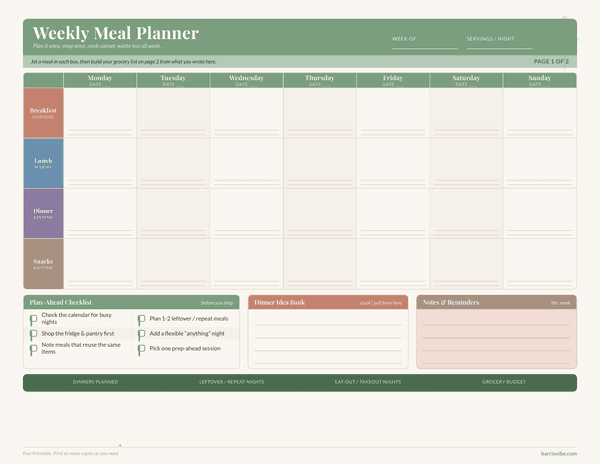
Weekly Meal Planner, Free Printable
A free printable weekly meal planner with a Monday, Sunday grid for breakfast, lunch, dinner, and snacks, plus a by-aisle grocery list and prep plan so you can plan your meals for the week and shop just once.
How do you meal plan healthy on a busy schedule?
Lean on batch cooking and a shopping list that matches your plan. Once your dinners are set, prep the components that take longest, roast a tray of vegetables, cook a pot of grains, and portion a protein or two on the weekend, so weeknight cooking becomes assembly instead of starting from zero. Storing those components in a set of clear glass meal-prep containers keeps them visible and grab-ready, which is half the battle when you are tired and tempted to order in. Then translate your plan straight into groceries: our free grocery list template organizes everything by aisle so you shop once and skip the midweek runs that lead to impulse takeout. Label each container with the day it is for, and dinner becomes a matter of reheating rather than deciding. The rule that ties it together, plan, prep, shop from the plan, is what keeps healthy eating running on the weeks you have the least time to think about it.
What are the best healthy meals to keep on repeat?
The best meals for a healthy rotation are simple, flexible "formulas" you can rebuild endlessly with whatever is fresh. Instead of memorizing recipes, keep a handful of templates that always deliver a balanced plate:
- Grain bowls, a base grain, a protein, roasted veg, and a sauce; endlessly swappable and great for using up odds and ends
- Sheet-pan dinners, a protein plus chopped vegetables roasted together on one tray for near-zero cleanup
- Big salads with a protein, greens, a cooked protein, beans or grains, and a simple dressing that makes it a meal, not a side
- Soup, stew, or chili with beans, batch-cooked, freezes beautifully, and stretches across several dinners and lunches
- Stir-fry over rice, whatever protein and vegetables you have, a quick sauce, and a pot of grains ready to go
- Breakfast-for-dinner, eggs, sautéed veg, and whole-grain toast for the nights nobody wants to cook
Rotating five or six of these covers most weeks without repetition ever feeling boring, because the fillings change even when the format does not. Keep the list on your fridge next to the planner, and picking dinners becomes a thirty-second job instead of a nightly negotiation. Familiar formulas are what make healthy meal planning stick past the first enthusiastic week.
How do you stop a healthy meal plan from falling apart midweek?
Plan a short weekly reset and never aim for perfect. Pick one calm window, Sunday afternoon works for most people, to glance at the week ahead, choose your dinners, and write out the grocery list in one sitting, before decision fatigue sets in. Just as important: build in slack. When Tuesday goes sideways, do not scrap the plan; slide that dinner to the leftover night and keep going. A meal plan is a guide, not a test you can fail, and cooking four of five planned dinners is a genuine win, not a shortfall. Keep the printable somewhere you actually look, check off meals as you go, and jot notes about what worked so next week's plan gets easier to make. The households that eat well consistently are not more disciplined, they just decided ahead of time, on a single sheet, so the tired version of themselves did not have to.
Weekly Meal Planner, Free Printable
A free printable weekly meal planner with a Monday, Sunday grid for breakfast, lunch, dinner, and snacks, plus a by-aisle grocery list and prep plan so you can plan your meals for the week and shop just once.
Fill in one week, stick it on the fridge, and let the plan carry you past Wednesday. Eating well is far less about willpower than about deciding once, calmly, before the week begins, and letting a simple printed sheet remember the plan so you do not have to.
Frequently Asked Questions
How do I start meal planning for healthy eating?
Start with dinners only. Pick a calm window each week, choose five dinners built around balanced plates (protein, vegetables, a smart carb), leave one leftover night and one flexible night, then write your grocery list from that plan. Let breakfast and lunch run on a few reliable repeats.
What does a healthy meal plan look like?
A healthy meal plan fills roughly half each plate with vegetables or fruit, a quarter with protein, and a quarter with a whole grain or starchy carb. Rather than fixed recipes, it uses flexible formulas like grain bowls, sheet-pan dinners, and big salads you can rebuild with whatever is fresh.
How many meals should I plan for the week?
Plan five dinners rather than all seven. Leave one night for leftovers and one flexible night for when plans change, so a single busy evening never wrecks the whole plan. Keep breakfasts and lunches on a short rotation of three or four defaults instead of planning each one.
How do I meal plan healthy on a tight budget?
Plan around inexpensive proteins like beans, eggs, and chicken, build meals from what is on sale, and batch-cook to cut waste. Shopping from an aisle-organized list keeps you from impulse buys and midweek takeout runs, which is usually where a healthy grocery budget quietly breaks down.
How do I stick to a meal plan when the week gets busy?
Batch-prep the slow components on the weekend so weeknight cooking is just assembly, and build slack into the plan. When a night goes sideways, slide that dinner to your leftover night instead of scrapping the plan. Cooking four of five planned dinners is a win, not a failure.