Some links in this guide are affiliate links, if you buy through them we may earn a small commission at no extra cost to you. Here’s our disclosure.
Quick Answer
A free printable meal planner works when it's simple and visible: a Monday-through-Sunday grid with breakfast, lunch, dinner, and snack lines plus a notes column. Fill it in five minutes by shopping your pantry first, anchoring each day to a theme, then carrying missing ingredients onto your grocery list.
It's five o'clock, everyone's hungry, and you're standing in front of an open fridge with no idea what to make. So dinner becomes whatever's fastest, takeout again, or the same three meals on rotation until nobody at the table wants them. Then Saturday's grocery run turns into wandering the aisles, grabbing things you already have at home and forgetting the one ingredient you actually needed. Half of what you did buy wilts in the crisper by Thursday, and you tell yourself next week will be different. If that's your week, the exhausting part isn't the cooking, it's the deciding. Every single day you solve the same problem from scratch, usually at the worst possible moment, when you're tired, hungry, and short on time. That mental load has a name: decision fatigue, and dinnertime is where it hits hardest, night after night. It's the reason a full fridge can still feel like there's "nothing to eat," and why the smartest, most organized people still end up ordering pizza on a Tuesday. The good news is that the deciding is the one part you can do once, in advance, in a single calm sitting on one sheet of paper, and then simply follow it for the rest of the week.
What makes a free printable meal planner one you'll actually use?
A meal planner printable free download only works if it's simple enough to fill in five minutes and flexible enough to survive a real week. The planners people abandon are the fussy ones, rigid time slots, calorie fields, and blank spaces for recipes you'll never write in. The ones that stick keep it to the essentials: a Monday-through-Sunday grid with room for breakfast, lunch, dinner, and a snack, plus a short notes column for the week's oddities like late practice, a leftovers night, or a dinner out. A good free printable meal planner also lives where you make decisions, on the fridge, not buried in an app you forget to open. Physical and visible beats digital and hidden, because the whole point is to remove a decision, not add another login. Choose one that matches how you actually cook: loose enough to swap days around when plans change, structured enough to still guide your grocery list.
How do you fill out a weekly meal planner, step by step?
Fill out a weekly meal planner in one short sitting, working from what you already have toward what you still need to buy. Start by "shopping" your fridge, freezer, and pantry, anything close to expiring becomes this week's first dinners, so nothing good goes to waste. Next, anchor each day to a loose theme so you're choosing within limits instead of from infinity, which is where most people freeze up. Then fill the grid, spreading effort across the week: quick meals on your busiest nights, and a bigger cook on a day you actually have time. Look at your real calendar as you go, so soccer practice and late meetings land on your easiest dinners. Finally, circle the ingredients you don't have and carry them straight onto your grocery list before you forget. Keep the whole thing loose, this is a starting point for the week, not a contract. Themed nights make the blank page far less intimidating, because you're picking one taco dinner instead of picking from every meal that exists:
| Day | Dinner theme | Why it works |
|---|---|---|
| Monday | Pantry / quick | Ease into the week on autopilot |
| Tuesday | Tacos or bowls | Endlessly customizable, kid-friendly |
| Wednesday | Sheet-pan | One pan, minimal cleanup |
| Thursday | Leftovers remix | Clears the fridge, zero waste |
| Friday | Homemade takeout | Feels like a treat, costs less |
| Saturday | Try something new | Save it for a day you have time |
| Sunday | Batch cook / prep | Sets up the busy days ahead |
If planning the whole week from a blank grid still feels like a lot, our step-by-step guide to how to meal plan for the week walks through the same system in more detail. Ready to try it? Download the planner, print a copy, and fill in this week before you shop.
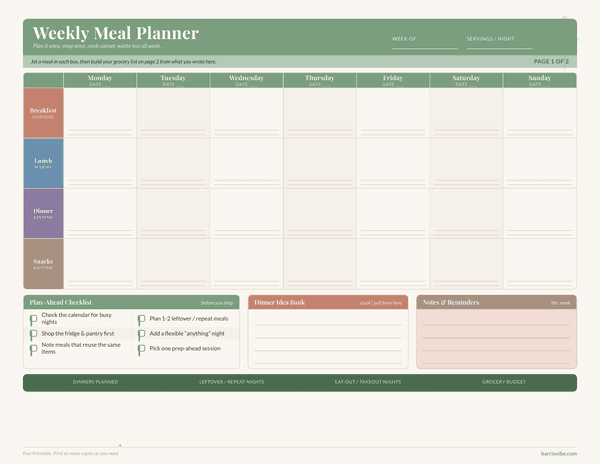
Weekly Meal Planner, Free Printable
A free printable weekly meal planner with a Monday, Sunday grid for breakfast, lunch, dinner, and snacks, plus a by-aisle grocery list and prep plan so you can plan your meals for the week and shop just once.
What should you plan for breakfast, lunch, dinner, and snacks?
Plan each meal to match how much attention it realistically gets, and don't try to make every slot exciting. Breakfast should run on repeat, pick two or three rotating options like oatmeal, scrambled eggs, or yogurt and fruit, and stop reinventing it every morning. Lunches are best batched: cook once and portion into containers, or plan deliberate leftovers from the night before so nobody's scrambling at noon. Dinner is where your planning energy belongs, since it's the meal most likely to collapse into last-minute takeout when you're unprepared. Snacks deserve a line too, because unplanned snacking is where grocery budgets quietly leak, jot a couple of easy options like fruit, cheese, or crackers so there's an answer besides "whatever's in the cabinet." Writing all four into your weekly meal planner turns vague intentions into a shopping list you can act on, and it keeps you from over-buying for meals that never actually needed a plan in the first place.
How does a free printable meal planner save money and cut food waste?
A free printable meal planner saves money because it forces you to buy for meals you'll actually make instead of shopping on impulse. The average U.S. household throws out a meaningful share of the food it brings home, and most of that waste starts right at the store, grabbing produce with no plan, then watching it spoil in the drawer. When you plan first, every item on your list has a job and a day attached to it, so far less rots in the crisper. Planning also closes the second-biggest budget leak: the mid-week takeout you reach for when there's supposedly "nothing to eat." A visible plan on the fridge quietly removes that excuse. Bonus savings come from planning around what's already in your pantry and what's on sale that week, and from cooking once to eat twice. Over a single month, trimming even one or two takeout nights and one bag of spoiled groceries adds up to real, repeatable savings.
How do you stick to meal planning when the week gets busy?
Stick to meal planning by making it a five-minute habit you attach to something you already do, not another chore to remember. Plan at the same moment each week, Sunday coffee, or right after you drag the trash bins out, so it happens without a decision. Keep the friction low: slip your printed planner into a reusable dry-erase pocket sleeve and hang it on the fridge, so you can wipe it clean and rewrite each week instead of hunting for a fresh copy. Plan realistically, too, pencil in a leftovers night and a "breakfast for dinner" night on purpose, because a plan that assumes seven flawless dinners breaks the first hard day. And when the week goes sideways, don't scrap the whole thing; just slide meals to another day and keep going. The families who keep meal planning aren't the most disciplined ones. They're the ones whose system is loose enough to bend without snapping under a normal, messy week.
Do you need a meal planner and a grocery list, or just one?
You need both, but they're really two halves of the same five-minute routine, the planner decides what you'll eat, and the list turns that into what you'll buy. Fill in your weekly meal planner first, then read across it and write down every ingredient you don't already have on hand. That order matters: planning before you list is what prevents both the impulse buys and the forgotten essentials that send you back to the store mid-week. Keep them together, ideally on the fridge side by side, so Saturday's shopping becomes a matter of copying, not remembering. To make the second half faster, pair your planner with our by-aisle grocery list template, which groups items by store section so you're not backtracking across the store three times. Plan on one sheet, shop from the other, and the whole "what's for dinner" problem shrinks to a single calm sitting each week, one that pays you back in saved money, saved time, and a fridge full of food that actually gets eaten.
Grab the free printable meal planner below, print it once, and put it somewhere you'll actually see it.
Weekly Meal Planner, Free Printable
A free printable weekly meal planner with a Monday, Sunday grid for breakfast, lunch, dinner, and snacks, plus a by-aisle grocery list and prep plan so you can plan your meals for the week and shop just once.
Let the plan answer the five o'clock question so you don't have to. You don't need to be a naturally organized person or a confident cook to pull this off, you just need the deciding done in advance, where it's calm and quiet instead of hungry and rushed. A calmer week of dinners, and a lighter grocery bill, is built one quick planning session at a time.
Frequently Asked Questions
How do I start meal planning for beginners?
Start small: plan only dinners for one week. Shop your fridge and pantry first, pick five or six meals you already know how to make, anchor each to a loose theme, and write missing ingredients onto a grocery list. Once dinners feel easy, add lunches and breakfasts.
What is the best way to organize a weekly meal planner?
Use a Monday-through-Sunday grid with rows for breakfast, lunch, dinner, and snacks, plus a notes column for busy nights. Assign a theme to each day, put quick meals on your busiest evenings, and keep the planner on the fridge so it's visible when you decide.
Should I print a new meal planner every week?
You can, but you don't have to. Slip one printed copy into a dry-erase pocket sleeve and wipe it clean each week, or reprint weekly if you like a fresh page and want to keep past plans. Both work, pick whichever you'll actually keep up with.
How does meal planning save money?
Meal planning saves money by making you buy only for meals you'll actually cook, which cuts impulse purchases and spoiled produce. It also removes the mid-week takeout excuse, since there's always a plan for dinner. Planning around sales and pantry stock adds even more savings.
How far ahead should I plan meals?
One week is the sweet spot for most families. It's long enough to shop once and short enough that plans don't go stale or ignore what's already in your fridge. If a week feels like a lot, start by planning just three or four dinners and build from there.