Some links in this guide are affiliate links, if you buy through them we may earn a small commission at no extra cost to you. Here’s our disclosure.
Quick Answer
A master grocery shopping list is organized by store section, produce, dairy, meat, pantry, frozen, and household, so you shop in one loop without backtracking. Build the categories once, check what you're low on, add the week's meal-plan ingredients, and stick to it to skip impulse buys and stay on budget.
You get to the store with a rough idea in your head, and it falls apart by the second aisle. You wander back for the milk you passed, second-guess whether you already have garlic at home, and toss in three things you didn't need because they looked good. Then you get home, start dinner, and realize the one ingredient the whole meal depended on is still sitting on the shelf at the store. Sound familiar? Shopping without a real list turns a twenty-minute errand into an hour of backtracking, impulse buys, and a receipt that's somehow forty dollars higher than you planned. It's not that you're disorganized. It's that a scribbled note on the back of an envelope was never going to hold up against a busy store, a hungry brain, and a hundred bright packages competing for your attention. And the more often it happens, the more shopping starts to feel like a chore you brace yourself for instead of a quick errand you knock out. The fix isn't shopping more carefully. It's shopping with a better list.
What should be on a master grocery shopping list?
A good grocery shopping list is organized by store section, not by the random order things pop into your head. When your list mirrors the layout of the store, produce, then dairy, then pantry, then frozen, you shop in one clean loop instead of crisscrossing back and forth. A master list groups your regular buys into fixed categories so you can scan, check what you're low on, and add the week's extras in seconds. The core sections most kitchens need are:
- Produce, fruits, vegetables, fresh herbs
- Dairy & eggs, milk, butter, cheese, yogurt
- Meat & seafood, proteins for the week's meals
- Pantry & dry goods, grains, canned items, oils, spices
- Frozen, vegetables, fruit, quick meals
- Bakery & bread
- Household & personal, cleaning supplies, paper goods, toiletries
Build the categories once, and every future list starts half-finished, you're only ever adding the week's specifics on top of a structure that never changes. That's the real point of a master grocery shopping list: it removes the blank-page problem, so planning your week takes two minutes instead of twenty.
How do you organize a grocery shopping list by aisle?
Organize your grocery list by aisle by matching its order to the path you actually walk through your store. Most supermarkets follow the same rough flow: produce along the front, fresh departments around the perimeter, and shelf-stable goods through the middle. When your shopping list follows that same route, you pick up everything in one pass and never double back. Start each section as a heading, list your staples underneath, and leave a few blank lines to add the week's specifics. Keep frozen and refrigerated items grouped at the end so they spend the least time out of the cold, which matters most on warm days or a long drive home. If you shop mostly at one store, jot the aisle numbers next to each category the first time, you'll memorize the layout fast, and every trip after that gets quicker. A by-aisle grocery list template does this thinking for you, so you're not reorganizing your brain in the middle of a crowded store. It also makes the trip feel shorter: instead of scanning a jumbled note and hoping you didn't miss anything, you clear one section, move to the next, and know you're done when the last box is checked.
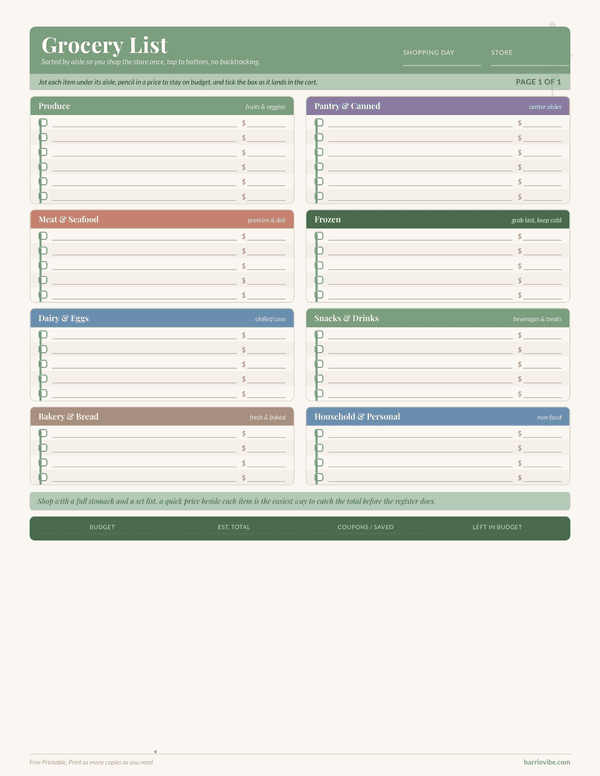
Grocery List Template (By Aisle), Free Printable
A free printable grocery list template organized by store aisle, produce, meat, dairy, pantry, frozen, and more, with a price column and budget tracker so you shop faster and spend less.
How do you turn your meal plan into a grocery list?
Turn your meal plan into a grocery list by working backward from each recipe: list every ingredient a meal needs, then cross off what you already have. Go dish by dish for the week, writing down quantities as you go, two onions here, a can of tomatoes there, so nothing gets under-bought or forgotten. Once every recipe is accounted for, sort those ingredients into your list's store sections and merge duplicates, so "onion" appears once with the total you need rather than scattered five times. Finish by checking your fridge, freezer, and pantry to strike anything you're already stocked on. This is where meal planning and shopping click together: if you build your week's meals first with our weekly meal plan printable, the grocery list practically writes itself. Ten minutes of planning at the kitchen table saves you the mid-week "what's for dinner" scramble and a second trip to the store. A handy shortcut: as you list each recipe's ingredients, note which meal they belong to in the margin, so if you swap a dinner later you know exactly what to add or remove from the list.
How does a grocery list help you stick to a budget?
A grocery list keeps you on budget because it turns shopping from an open-ended browse into a defined mission, you buy what's written down and skip what isn't. Impulse purchases are where most grocery budgets quietly blow up: the endcap snacks, the "might as well" extras, the duplicate you didn't know you already had. A written list is a pre-made decision you get to lean on when you're tired and everything looks appealing. To stretch it further, add a running total or a budget column to your list and tally as you shop, so the number at checkout is never a surprise. Plan meals around what's already in your pantry and what's on sale, and you trim the bill before you ever leave home. Shopping your list once, rather than making three small trips a week, cuts impulse spending even more, since every extra visit is another chance to overspend on things you didn't plan for. Over a month, that discipline adds up: fewer forgotten ingredients means fewer emergency runs, and fewer runs means fewer cart-side temptations quietly padding the total.
What staples should always be on your grocery list?
Keep a set of non-negotiable staples permanently on your grocery shopping list so you're never caught without the building blocks of a quick meal. These are the items you rebuild a week of dinners around: onions, garlic, rice or pasta, canned beans and tomatoes, eggs, cooking oil, broth, and your family's go-to spices. Pre-printing them on your list means you just check what's running low instead of trying to remember from scratch every week. It also helps to know what's actually in your pantry before you shop, a quick inventory stops you from buying a fourth jar of cumin. Storing staples in a set of clear stackable bins with a simple label maker makes that inventory a five-second glance, not a dig through the back of a cabinet. Our pantry staples list printable gives you a ready-made checklist of the essentials worth always having on hand, so restocking day becomes a matter of scanning shelves and checking boxes rather than guessing what you forgot last time.
How do you actually stick to your grocery list at the store?
Stick to your grocery list by treating it as the plan, not a suggestion, shop it top to bottom and resist adding anything that isn't on it. Eat before you go, because hungry shopping is how half the impulse buys end up in the cart. Keep your phone in your pocket and your eyes on the list so you move through each section with purpose. If something tempts you off-plan, give it the twenty-four-hour rule: if you still want it next trip, add it to next week's list. Shop the perimeter first for fresh items, then move through the center aisles only for what you've actually written down. A printed list you can physically check off beats a note buried in your phone, crossing items out gives you a clear finish line and keeps you from circling back. Print a fresh copy each week, and shopping becomes a quick, calm loop instead of a wander. If you'd rather not reprint, slip one copy into a sheet protector and check items off with a dry-erase marker, same structure, no paper wasted.
Grocery List Template (By Aisle), Free Printable
A free printable grocery list template organized by store aisle, produce, meat, dairy, pantry, frozen, and more, with a price column and budget tracker so you shop faster and spend less.
Keep your list on the fridge, add to it through the week as you run low, and let it do the deciding at the store. A calmer, cheaper shopping trip is really just a better list, filled in once, followed once, done.
Frequently Asked Questions
How do I organize a grocery shopping list?
Organize it by store section in the order you walk the store: produce, dairy and eggs, meat, pantry and dry goods, frozen, bakery, and household. Matching the list to the store's layout lets you shop in one clean loop instead of crisscrossing back and forth for forgotten items.
What should always be on a grocery list?
Keep core staples permanently listed: onions, garlic, rice or pasta, canned beans and tomatoes, eggs, cooking oil, broth, and your go-to spices. These rebuild a week of meals, so each trip you just check what's running low instead of remembering every essential from scratch.
How do I make a grocery list from a meal plan?
Go recipe by recipe, list every ingredient with its quantity, then merge duplicates and cross off what you already have. Sort the remaining items into your list's store sections. Planning meals first means the grocery list practically writes itself in about ten minutes.
How does a grocery list save money?
A written list is a pre-made decision that keeps you from impulse buys, endcap snacks, and duplicates you already own. Add a budget or running-total column, plan around sales and your pantry, and shop once a week to cut the extra trips where overspending happens.
Should I print a new grocery list every week?
You can, and many people like starting fresh each week. But it isn't required, slip one printed copy into a sheet protector and check items off with a dry-erase marker, then wipe it clean for the next trip. Either way the by-aisle structure stays the same.